pōpokotea - whitehead
You might see these manu performing some impressive acrobatics, hanging upside down trying to snag an insect based treat from the undersides of leaves.
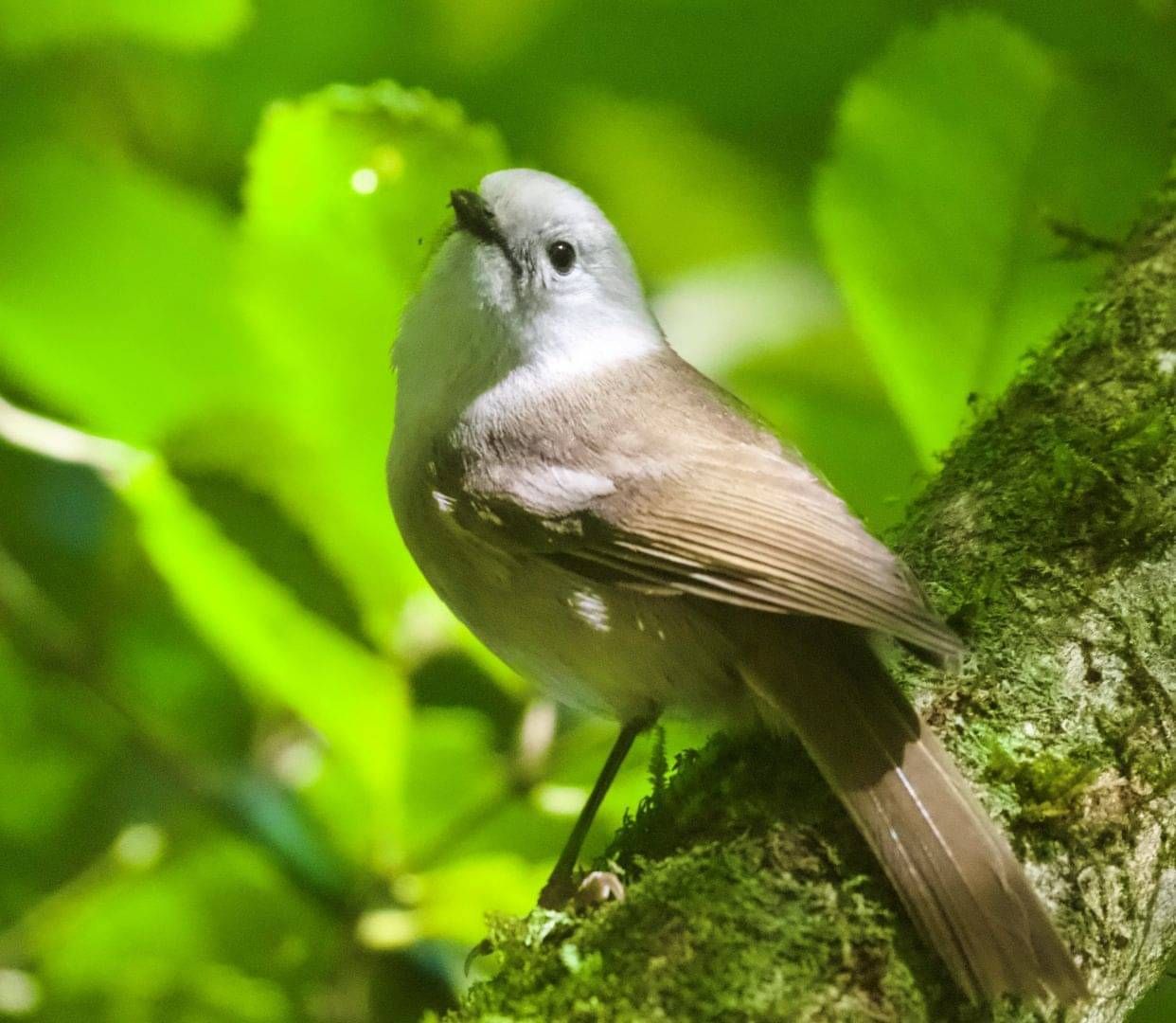
Photo: Tania Wilkinson

pōpokotea - whitehead
Mohoua albicilla

New Zealand Status: Endemic
Conservation Status: Not threatened
Lifespan: Up to 16 years
Size: 15cm (same size as a sparrow)
Weight: 15-18g

- Pōpokotea are reluctant flyers, tending to avoid crossing open ground, so forest clearance has done a lot of damage.
- Their nesting behaviour, creating a woven cup for a nest, means they are less susceptible to predation compared to some birds.
Is it a whitehead?
Look for: There's a big clue in the name here. Most of their body is white but the head is strikingly so.
Listen for: A big clue for pōpokotea is that they tend to hang around in big groups, so listen for multiple birds making a twittering sound.
Did you know?
- Whiteheads are the only North Island bird to host the brood-parasitic koekoeā/long-tailed cuckoo. These cuckoos lay their eggs in a whitehead's nest.
- After the whitehead has incubated the egg along with her own eggs, the cuckoo chick hatches and ejects the whitehead eggs or chicks from the nest. It then gets everything it needs from the doting whitehead parents.
Pōpokotea @ Sanctuary Mountain Maungatautari
Pōpokotea are often seen in the Southern Enclosure. They tend to progress their way through the ngahere in decent sized groups so listen out for their canary-like twittering. If you do hear these little critters, often a good plan is to enjoy a nice stare into the vague direction of the chatter. Because of their tendency to hang out in groups, one of the light headed beauties will soon make itself known.
In 2009, 60 pōpokotea from Little Barrier Island were translocated to Maungatautari.