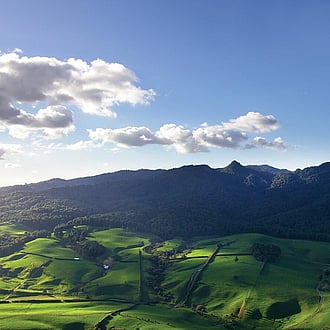
Our HistoryFrom the dawn of time, to the first arrival of humans and onwards to this current day, Maungatautari has endured.
The Flora
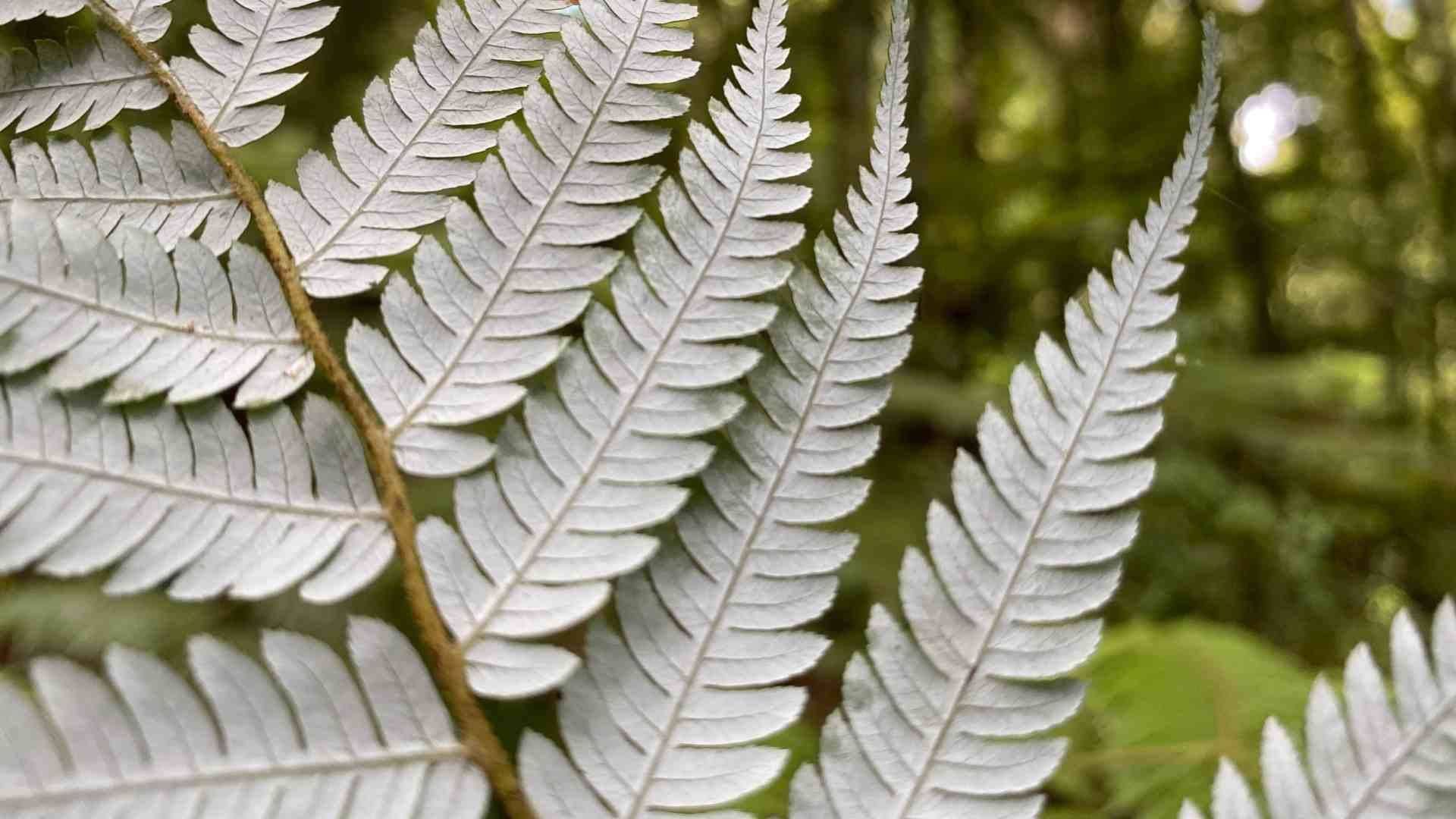
Our Flora
With all grazing mammals eradicated the forest of Maungatautari is now flourishing. A thick and lush understory can be seen which is quite contrasting to most native forests in New Zealand. Visitors can step through the gates into an ancient eco-system and view an array of native trees, ferns, shrubs, vines, mosses and fungi.
Significant areas of old-growth forest remain on Sanctuary Mountain - much more so than any other sanctuary in mainland New Zealand. Today, our mountain represents nearly half the forest remaining in our ecological district.
Forest on the lower mountain
In the lower reaches of the mountain, scattered rimu and rata emerge over a canopy of tawa, mangeao, kamahi, hinau, miro, rewarewa and pukatea. Magnificent stands of mamaku are a feature while dense tangles of kiekie and supplejack along with toropapa, silver fern and hen and chicken fern form much of the understory. A range of native orchids may also be observed.
There's a special structure to an undamaged forest - undergrowth, understory, sub-canopy, canopy, and emergent trees. In most New Zealand forests the understory and sub-canopy are absent. This is because every time a seedling became established in the last 200 years or so, a goat or deer would come along and eat it, preventing them from growing. Visitors to the southern enclosure will notice the large canopy trees and the small undergrowth species which have grown up since introduced browsing species have been eradicated.
Higher altitude forest
Further up the mountain you will notice distinct changes in plant composition and abundance. This is due to decreasing temperature, increasing rainfall and associated soil and climate changes as you climb higher. The increased altitude sees tawari, kamahi, tawheowheo, broadleaf and Halls totara become more abundant. In this upland forest the understory consists of soft tree ferns, coprosma, toro, five-finger, raukawa and horopito as well as toropapa. Tawari is particularly noticeable in December and January with its mass of large white blooms (whakou). Epiphytes are more abundant in this cloudy humid environment, especially filmy ferns and kidney fern. Ground cover consists of crown fern, bush rice grass and hook-seeded sedges.
On rocky spurs you'll find low-growing tawheowheo, mingimingi and small shrubs, sedges, orchids, herbs and mosses.
Beside the walking tracks tiny seedlings have sprouted. Since the removal of all mammalian pests, the flora on Sanctuary Mountain are recovering at an incredible rate. Seeds are able to germinate instead of being eaten by rodents and the increasing bird population is helping with seed dispersal. The forest is regenerating naturally.
Come and Visit Us!
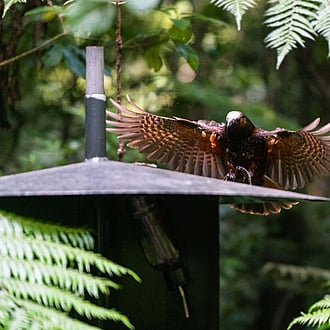
Our WildlifeBird sanctuary for endangered species, Sanctuary Mountain Maungatautari is home to kiwi & takahe.
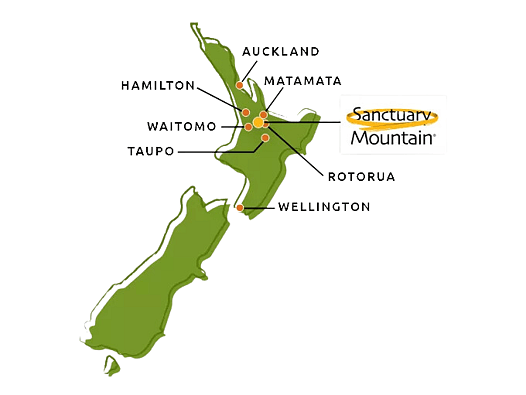
Sanctuary isn't far away!Just an hour from Hobbiton, Waitomo and the Hamilton Gardens, Sanctuary Mountain Maungatautari is a perfect stop on your trip!