tūī
Others may say boisterous and aggressive, we say enthusiastic and passionate.
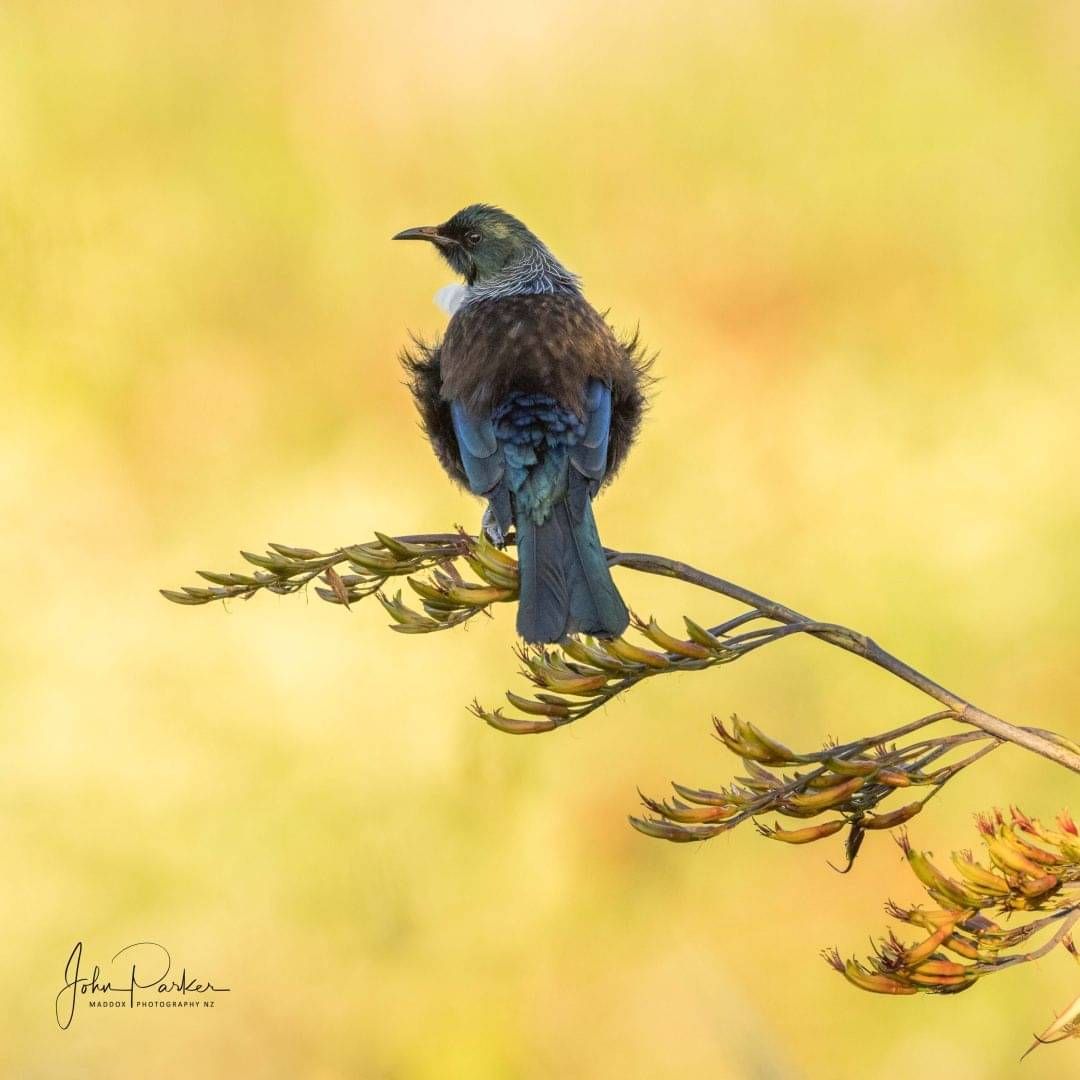
Photo: Nathan Wakley

tūī
Prosthemadera novaeseelandiae

New Zealand Status: Endemic
Conservation Status: Not threatened

Lifespan: 12 years or more
Size: 30cm (slightly bigger than a blackbird)
Weight: Up to 125g for the larger males

-Predation at the nest by possums, rats and mustelids.
Is it a tūī?
Look for: Black body with white throat tufts. Iridescent blue and green feathers when they catch the light just right. Don't be fooled by a blue or yellow face if they've been feeding on kōtukutuku or harakeke.
Listen for: All kinds of sounds! Similar to korimako/bellbird but with wheezes and grunts added to the mix. You'll often hear a whirring sound from their wings in flight, no doubt followed by some of their raucous vocals.
Did you know?
In some ways tūī have benefitted from human arrival, especially with the introduction of exotic flowering and fruiting plants.
Tūī are skillful mimics and often replicate korimako as well as less natural sounds such as phone ringtones and alarms.
Tūī @ Sanctuary Mountain Maungatautari
Tūī were surviving on Maungatautari, in the presence of introduced pests, before the completion of the fence in 2006. In spring and early summer check out the kōwhai trees around the Visitor Centre and the harakeke lining the path down to the main entrance. These are often favourite spots for tūī to feed on nectar. Tūī are very common in Te Tūī a Tāne (the Southern Enclosure) in spring. The top of the tower is often a good spot to see them darting between the giant Northern rātā.