tawa
Beilschmiedia tawa
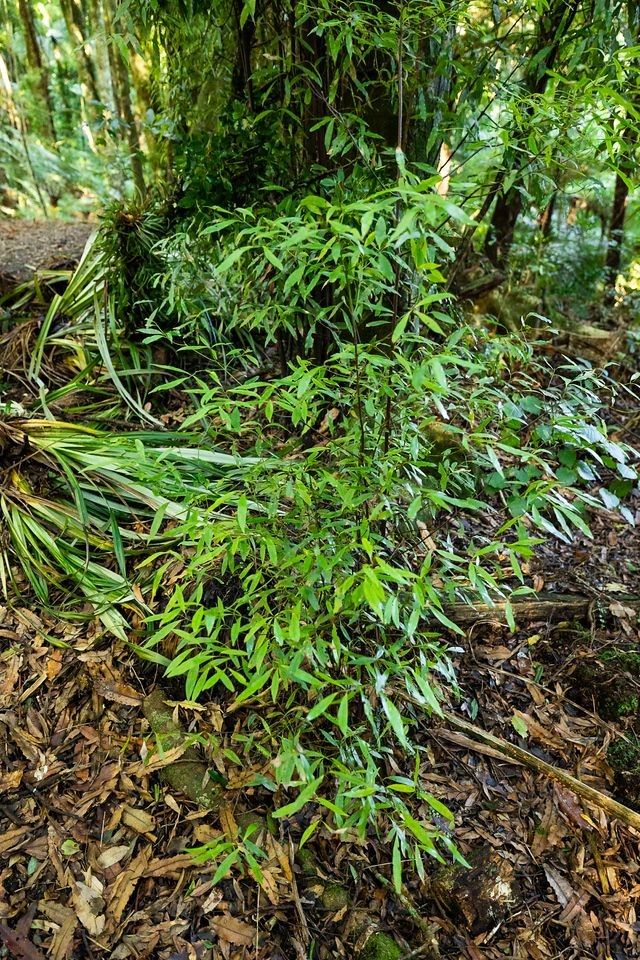
Photo: Lucy Schultz
| leaves | Alternating on the stem, narrow and 6-10cm long. |
| flowers | Tiny and green and visible in spring. |
| fruit | Dark purple/black grape/olive sized fruit most abundant in late summer. |
| bark | Dark, smooth and often covered in vines. |
| height | Up to 24m |


Tawa @ Sanctuary Mountain Maungatautari
Tawa is one of the dominant canopy trees at the lower elevations of the maunga. It can be seen throughout Te Tūī a Tāne both at ground level and from the top of the tower. Have a look and compare leaves found near the forest floor to those visible from the tower.
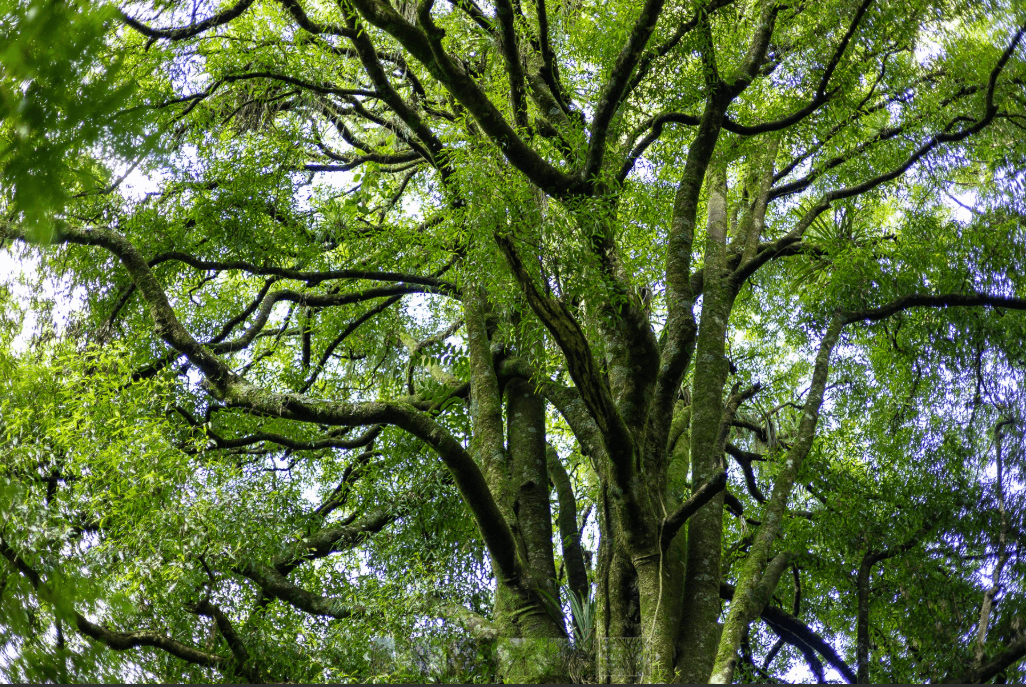
Photo: Lucy Schultz
Traditional Uses
The flesh of the fruit is edible but it was the steamed, roasted or boiled kernels that were most prized by Māori as a food source.
Tawa wood was used for bird spears and battens for walls and roofs of whare. More recently it has been used for everything from furniture to papermaking and flooring to firewood.
Biodiversity
The fruit is a favourite of kererū. Indeed, like many native trees, tawa berries are so big that kererū are the only bird species who can swallow them whole and therefore help disperse seeds across the forest.
The fruit is a favourite of kererū. Indeed, like many native trees, tawa berries are so big that kererū are the only bird species who can swallow them whole and therefore help disperse seeds across the forest.
References:
Which Native Tree? Andrew Crowe (2009)