pīpīwharauroa - shining cuckoo
Heard more than seen, this manu is a real treat to set your eyes upon. Unless you are a riroriro!
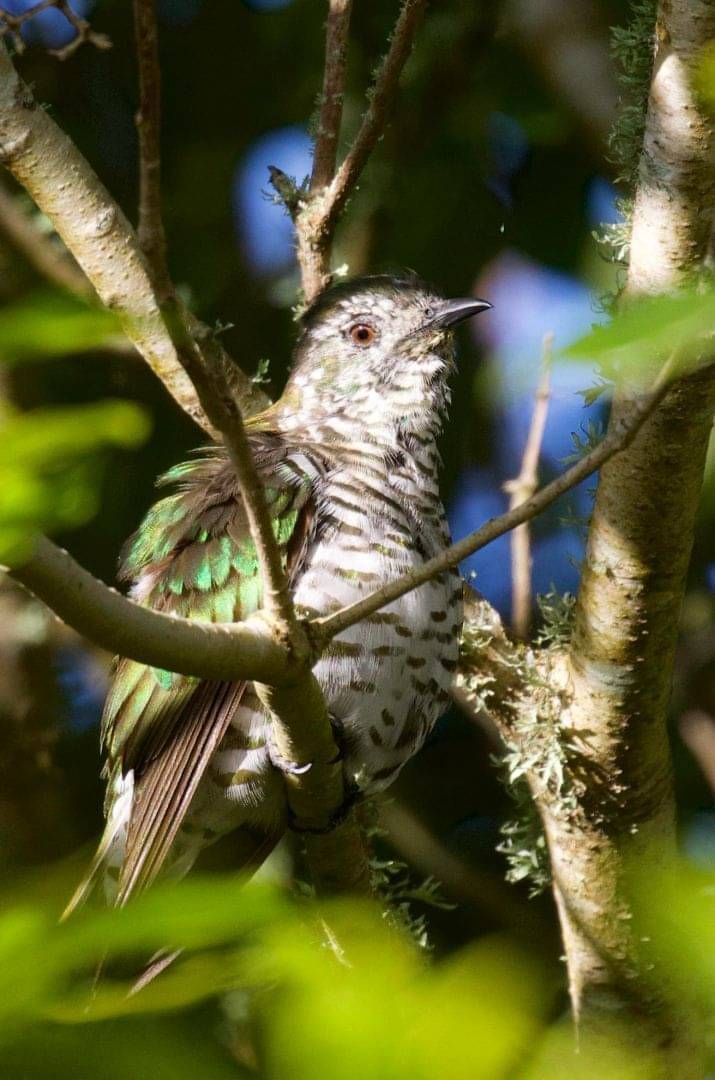
Photo: Tania Wilkinson

pīpīwharauroa - shining cuckoo
Chrysococcyx lucidus

New Zealand Status: Native
Conservation Status: Not threatened

Lifespan: Unknown
Size: 16cm (similar to a sparrow)
Weight: 23g

-Window strike is a common problem for Pīpīwharoroa.
Is it a shining cuckoo?
Look for: A flash of iridescent green feathers or a white and dark green striped body perched in a tree. If you spot a chick, is it being fed by a bird far smaller than itself?
Listen for: A very distinctive set of whistles, most of which go up in pitch with the last one usually going down.
Did you know?
- Pīpīwharauroa are brood parasites of riroriro/grey warblers so are often heard and seen in the same places. Adult riroriro will feed the shining cuckoos, even though they can be twice the size and four times the weight of their doting hosts.
- They migrate to New Guinea and the Solomon Islands over winter. It is believed that their disappearance in spring and reappearance year after year gave people a clue that there was undiscovered land further south in the Pacific.
- Shining cuckoos are able to eat hairy caterpillars that are toxic to most other birds. Their secret? A thick mucus membrane lining their gizzard.
Pīpīwharauroa @ Sanctuary Mountain Maungatautari
Listen out for them from about September onwards. You're far more likely to hear them than see them, but if you do hear their distinctive call then look out for green flashes or striped bellies.
References:
Predator Free NZ
New Zealand Birds Online