North Island kākā
Kākā means parrot in te reo Māori. They were considered kaitiakitanga (chief of the forest) by early Māori.
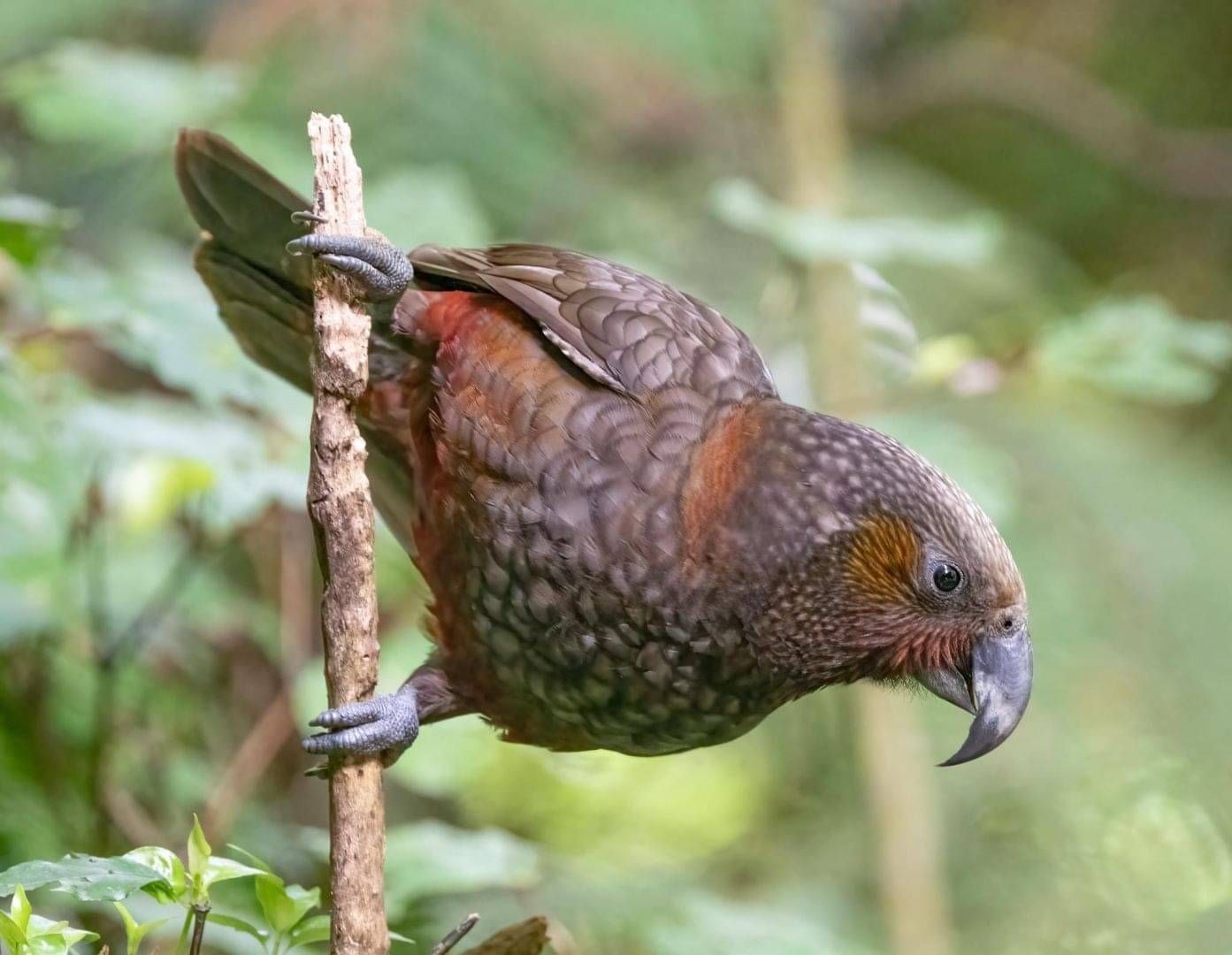
Photo: Geoff Shepherd

North Island kākā
Nestor meridionalis

New Zealand Status: Endemic
Conservation Status: At risk (recovering)
Lifespan: Up to 20 years in the wild (or longer in captivity)
Size: 38-44cm (a touch smaller than a kererū)
Weight: 340-400g

-Habitat loss.
-Predation by introduced predators such as stoats and possums.
-Competition from other browsers like possums and deer.
Is it a kākā?
Look for: If it's a parrot and is flying around in the sanctuary then it will be a kākā. They are brown lumps in the trees when still but show their beautiful orange and red feathers when swooping around.
Listen for: Kākā have quite the repertoire of sounds ranging from harsh cries to melodious whistles. If you're in doubt about which bird is making that sound then kākā would be a decent guess!
Did you know?
Kākā are pretty versatile when it comes to food. Depending on the season and what fruit and flowers are available, they can use their delicate tongue to drink nectar and their robust beak to rip into fruit. Their beak also doubles as a way to excavate bark to feed on grubs.
Kākā @ Sanctuary Mountain Maungatautari
The Clearing, in our Southern Enclosure, is a great spot to potentially see kākā. It's also a nice chance to sit down and take a moment to check in with yourself and see how you're feeling to be in such a pristine, ancient forest.
Listen out for their boisterous squarks as they fly overhead or their warbles as they chat to each other from up in the trees. They are very well camouflaged, blending into the deep browns on trunks but if you're lucky enough to see one take flight or swoop over you, you'll see the beautiful red/orange feathers on their underwings.
The kākā seem to go on a little OE over winter, finding food elsewhere. But we've noticed that they return at night, keeping the other birds up with their noisy chatter after dark. Why not come on a night tour and see if they are around?
Birds from multiple sites have been released from the onsite aviary from 2007 onwards. Kākā are also one of the few birds who can cross large pasture gaps and can therefore arrive at Maungatautari themselves.