pīwaiwaka - fantail
One of Aotearoa's most iconic birds.
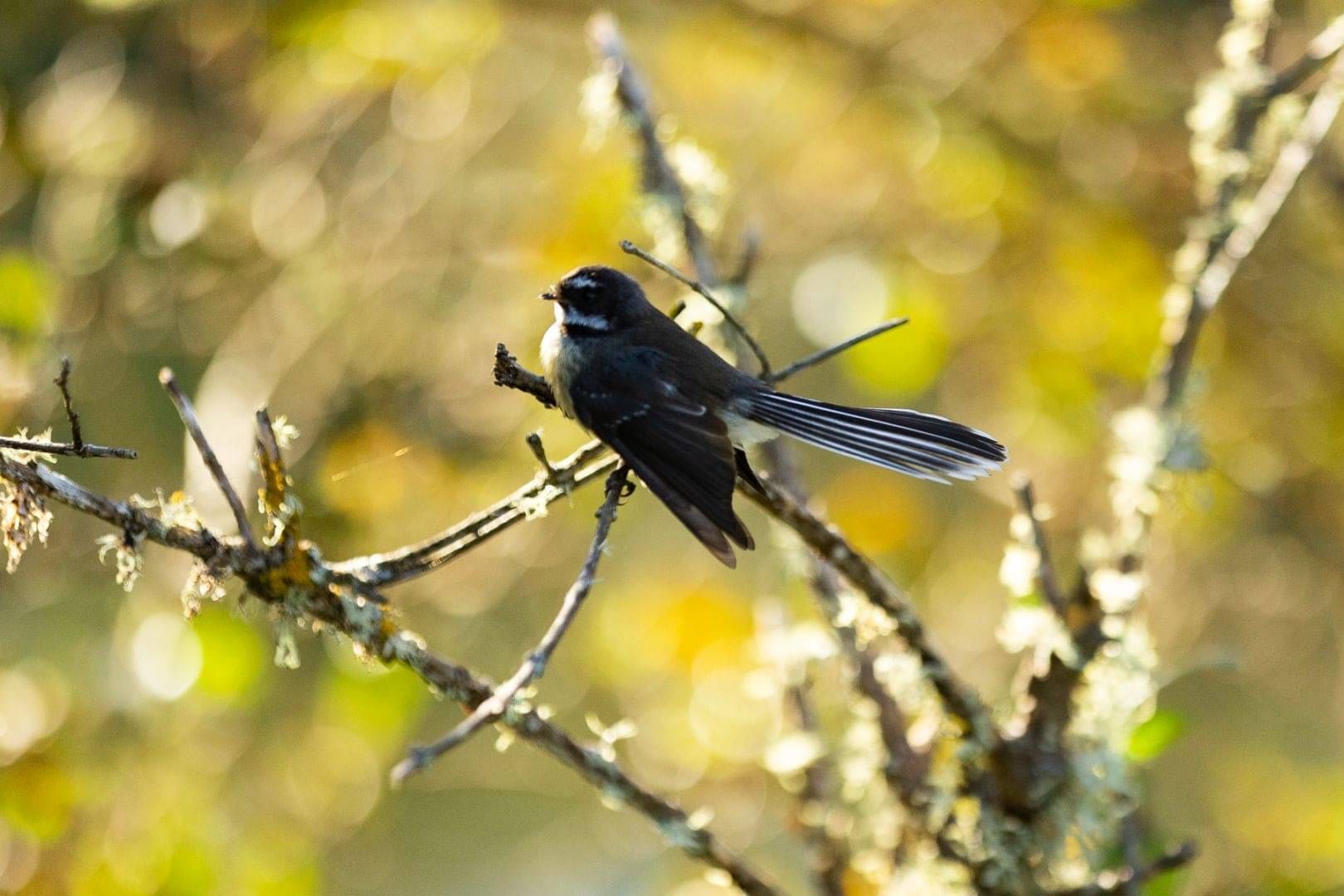
Photo: Lucy Schultz

pīwaiwaka - fantail
Rhipidura fuliginosa

New Zealand Status: Endemic
Conservation Status: Not threatened

Lifespan: Unknown
Size: 16cm (about the size of a sparrow)
Weight: 8g

-Predation by introduced mammals such as ship rats, although they are not as susceptible as many other species.
Is it a fantail?
Look for: The big clue is in the name. They use their fan shaped tails to change direction quickly when chasing insects.
Listen for: A high pitched cheep which sounds a bit more like a balloon being rubbed than some other similar sounding species.
Did you know?
- One of the reasons pīwaiwaka have coped relatively well with introduced predators is that they have 3 or 4 eggs per clutch.
- Another reason is their board diet, consisting mainly of insects. As well as following other birds or people to find food, fantails are capable of hawking and flushing. Hawking is when birds spy their food from a perch and take off to grab them mid-air. Flushing involves flying around vegetation to flush the insects out before eating them.
Pīwaiwaka @ Sanctuary Mountain Maungatautari
Pīwaiwaka were surviving on Maungatautari, in the presence of introduced pests, before the completion of the fence in 2006. They can be seen throughout Te Tūī a Tāne, the Southern Enclosure. Often they will follow other insectivores such as pōpokotea/whiteheads and tīeke/saddlebacks. A great place for spotting pīwaiwaka is down the public track between the Visitor Centre and the entrance to the Southern Enclosure.