Kiwi Translocation Season 2024
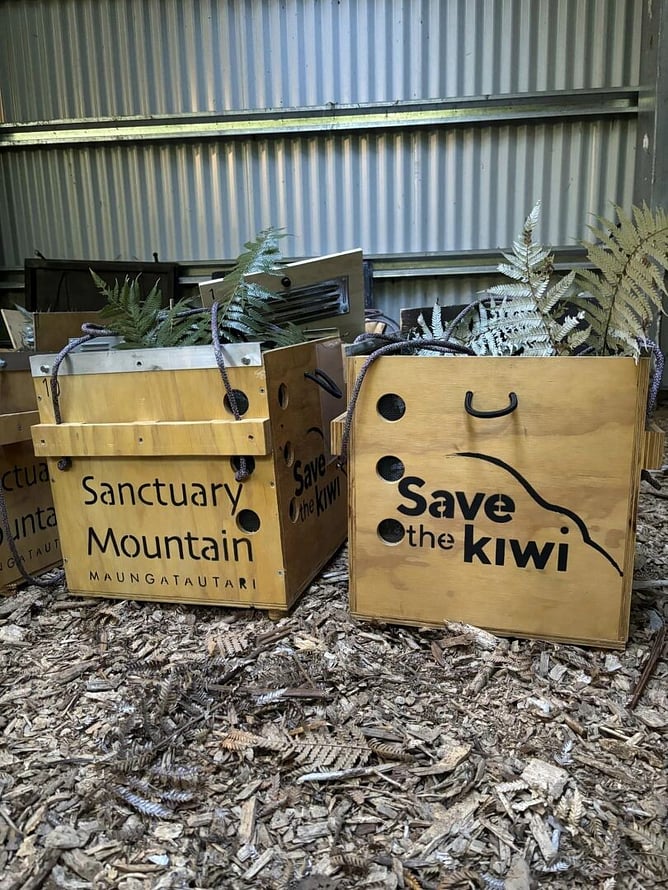
One of the biggest kiwi translocations took place between March and May in 2024. Sanctuary Mountain Maungatautari is a source population for the North Island brown kiwi of the western taxon.
The kiwi kōhanga at Sanctuary Mountain Maungatautari is nationally significant with a booming western brown kiwi (Apteryx mantelli) population. 2024 is the third year that translocations have taken place from Sanctuary Mountain Maungatautari to wild sites, with 222 birds transferred to Tongariro, Wellington and Taranaki.
Planning commenced in 2023 and translocations started in March 2024, founded in strong collaboration between Sanctuary Mountain Maungatautari, mana whenua, and Save the Kiwi, with assistance from Pukeatua School.
Here is a snapshot of the mahi involved from the period March – May 2024:
• 1,023 volunteer hours
• 993 staff hours
• 30 kiwi had full disease screening tests, and 222 kiwi health checks completed
• 84 kiwi dog (and handler) days looking for kiwi
• 50 people trained to gain accredited kiwi handler skills
• 324 kiwi were found, and 222 were suitable for transfer
It was incredibly rewarding to see inspired children, visitors, and community members who participated in this historic work, including Pukeatua School who hosted the kiwi health processing centre on their school grounds. During this year’s translocation of kiwi from Maungatautari, Pukeatua School students were the only school in New Zealand able to observe the kiwi and contribute to this work firsthand.
Many organisations also contributed time, staff, expertise or resources, including Ngāti Koroki Kahukura, Ngāti Hauā, Raukawa, Taranaki iwi, Taranaki Kiwi Trust, Department of Conservation, Taranaki Mounga Project, Capital Kiwi, Auckland Zoo, Hamilton Zoo, and many others – our thanks and appreciation to everyone involved. We eagerly look forward to the next season and the continued support of our partners and volunteers!
Kiwi founding population background information:
In 2005, Ngāti Hikairo ki Tongariro, one of the mana whenua of Tongariro, gifted four one-month-old chicks, two males and two females, to Ngāti Korokī Kahukura, the resident iwi of Sanctuary Mountain Maungatautari. These manu (birds) were the first kiwi to reside within the predator-free sanctuary in the heart of the Waikato, near Cambridge, and the first to be seen on Maungatautari for over 100 years.
In November 2005, a further three kiwi bred at the Otorohanga Kiwi House (OKH) were the first kiwi released into the southern enclosure at Maungatautari – one male Te Tuatahi a-nui, and two females Te Rahuraha and Horokio – in a fitting ceremony and a momentous moment for the OKH and Eric Fox, who were pleased to be able to release these young kiwi into a safe environment and become part of the founding population there.
In 2006, five captive bred kiwi from OKH were released by Eric and others into the safety of the southern enclosure, with 250 volunteers part of the special event. Now a total of eight kiwi to date from OKH, which fulfilled their genetic line, and no more kiwi were released from OKH to allow for diversity of other bloodlines brought in.
The first kiwi chick hatched in 100 years on mountain was the offspring of OKH female “Atua” and Rainbow Springs male “Elmo” – both only aged 2 years at time. The chick was named Huatahi (the first of the fruits).
70+ founding kiwi were gifted from other source sites including from the Waimarino tribes and Rotokare of Taranaki. Sanctuary Mountain Maungatautari and Ngāti Koroki Kahukura will continue to acknowledge our iwi and community who gifted 400 kiwi founders to the maunga.
In 2017, Sanctuary Mountain Maungatautari became a kōhanga kiwi site in partnership with Save the Kiwi.
In 2018, “Tahi” was ceremoniously released onto main mountain who came from a wild egg (King Country), incubated at OKH, and then spent a few months at Rotakare before releasem beginning the kōhanga kiwi introductions.
333 chicks were released onto Maungatautari through the kōhanga kiwi programme with Save the Kiwi leading to the 400+ founding kiwi population on the maunga.