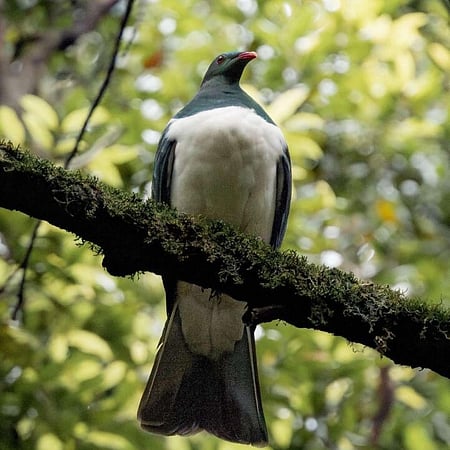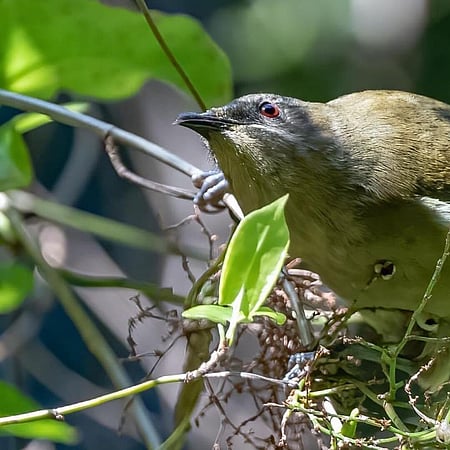
Korimako/Bellbird. Photo: Geoff Shepherd
Autumn / Winter
With the change in season comes a drop in the temperature and often an increase in the amount and ferocity of the rain and the wind. We strongly recommend you check the forecast before heading to the sanctuary and to be prepared for all conditions.
Lots of clothing layers is a great way to keep warm, a rain jacket is a must and why not throw in a spare pair of socks and shoes so you don't have to travel home with soggy feet!
While it's important to be prepared for wet weather, being in the forest while it's raining is actually a pretty awesome experience. The flora comes alive (or more alive) with the added moisture and all the earthy tones make themselves known to your nostrils. Plus the canopy provides pretty good protection from all but really heavy rain.
Autumn is a great time of year for spotting fungi. Keep an eye out on all the nurse logs to the side of the tracks. How many types can you spot? What would you call them if you were in charge of naming them?
In early autumn (March and April) we often see a lot of korimako/bellbirds right by the entrance to Te Tūī a Tāne. While these beautiful manu are heard all year round, they are usually pretty tricky to see. But at this time of year the fruit of the karamu and the flowers of the muehlenbeckia draw them down to something closer to eye-level.
Another place you may spot korimako is at the top of the tower. Rātāpiki/climbing rātā flowers in autumn and winter, providing an important source of food for nectar feeders such as korimako, tūī and hihi. The beautiful red flowers may remind you of pōhutukawa and rightly so, they are indeed in the same genus.
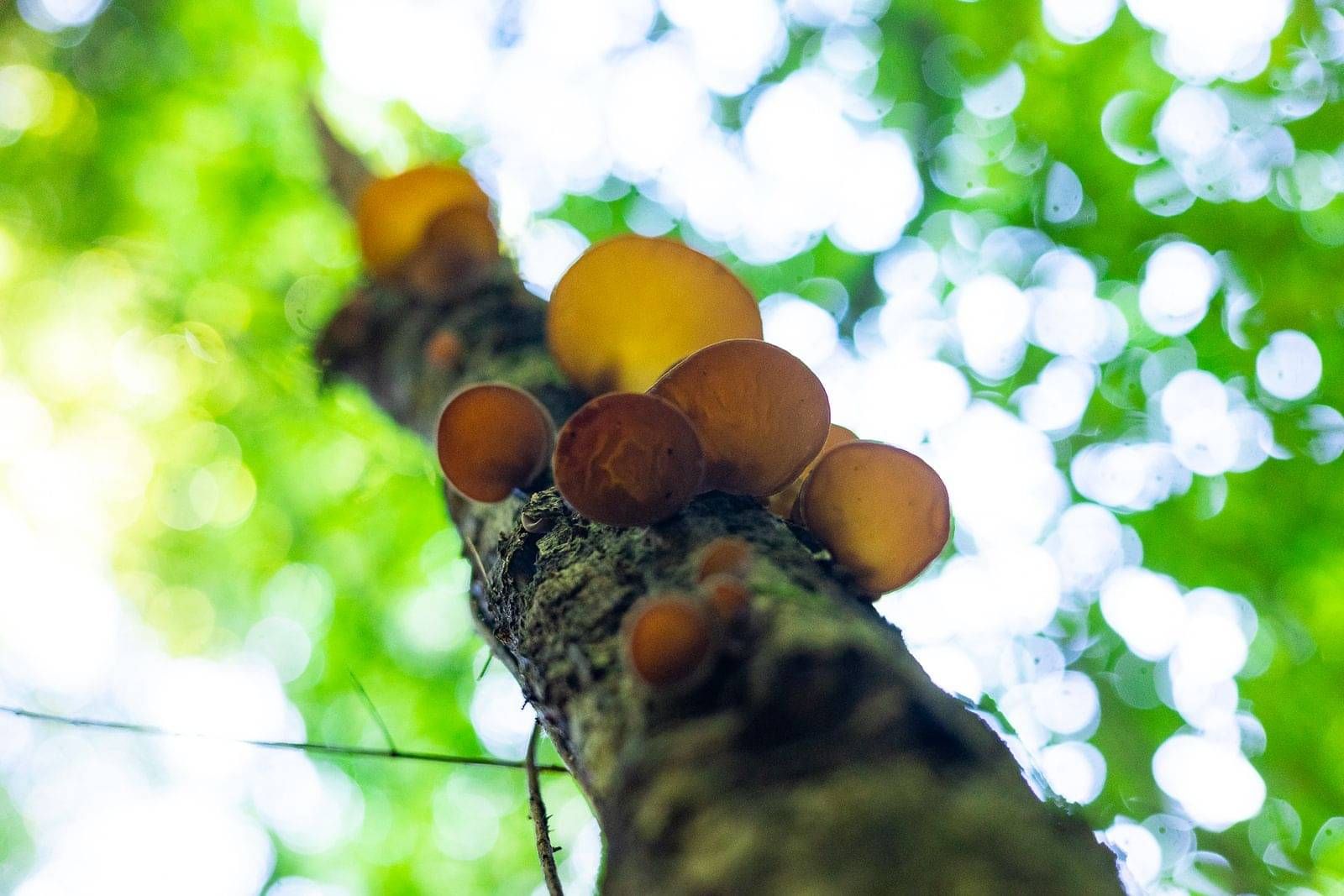
Fungi. Photo: Lucy Schultz
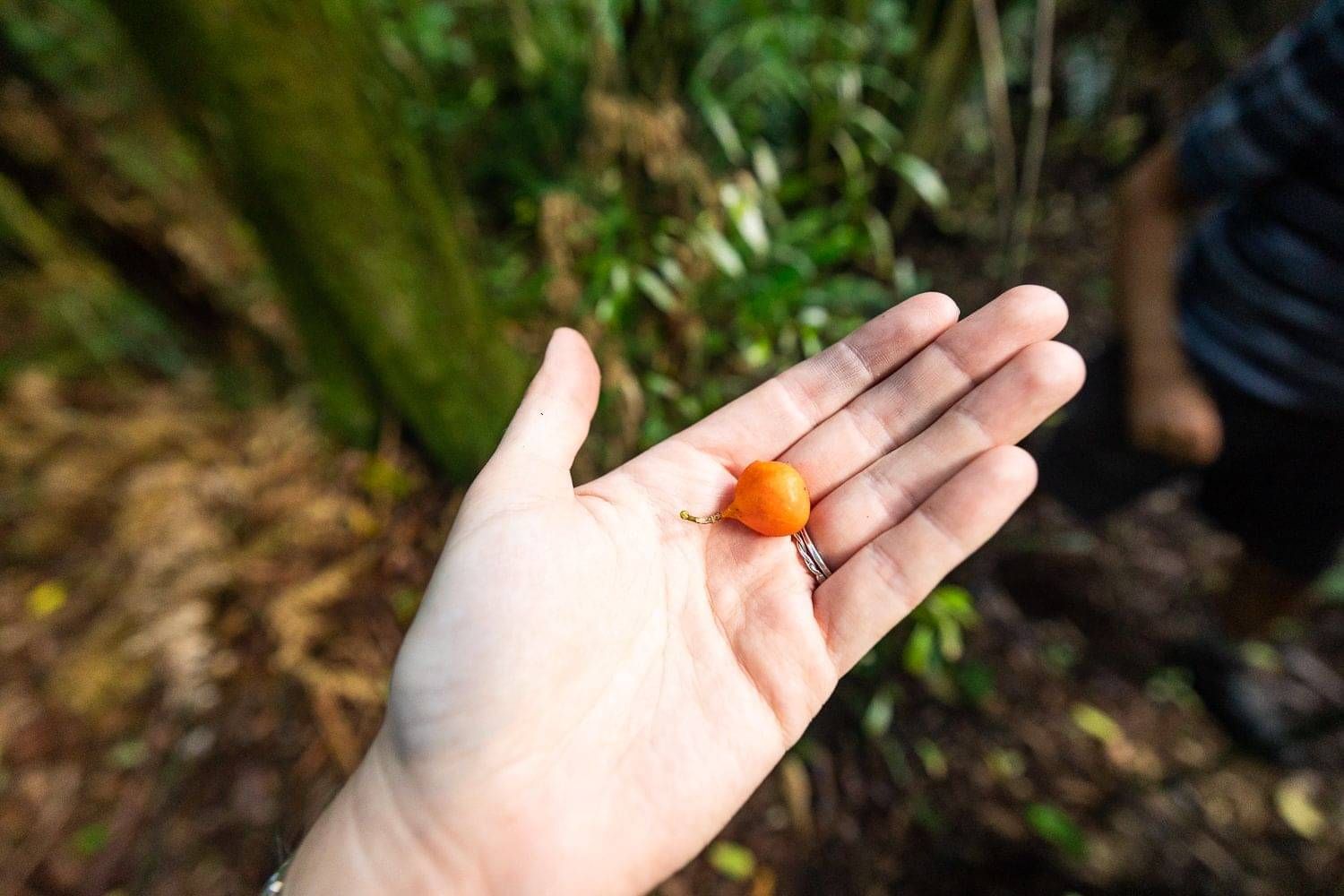
Kohia/NZ passionfruit. Photo: Lucy Schultz
Back at ground level, keep your eye out for the fruit of kohia/NZ passionfruit. The empty shells are usually all that's left of this orange fruit after kererū and other birds have had their fill.
In late autumn (May-ish), you might think it's snowing! The hairy seeds of pukatea can float down from the canopy in quite an impressive mass.
We do notice that kākā are less conspicuous outside of the spring and summer months. And as always there are no guarantees as to what you will see. But with fewer squarks from our parrot friends, you might be able to notice more of the trilling pōpokotea/whitehead groups, the boisterous tīeke/saddleback or the curious pītoitoi/North Island robin.
Around June, kererū are often seen slightly lower down in the forest as they search for patete/seven finger fruit.